
Adult Neuroplasticity: What Can You Really Change About Your Brain?
For years, the age of 25 was treated as a kind of neurological deadline. The idea was simple: childhood and adolescence were the years when the brain developed, and adulthood was when that development more or less stopped.
That picture was never quite accurate.
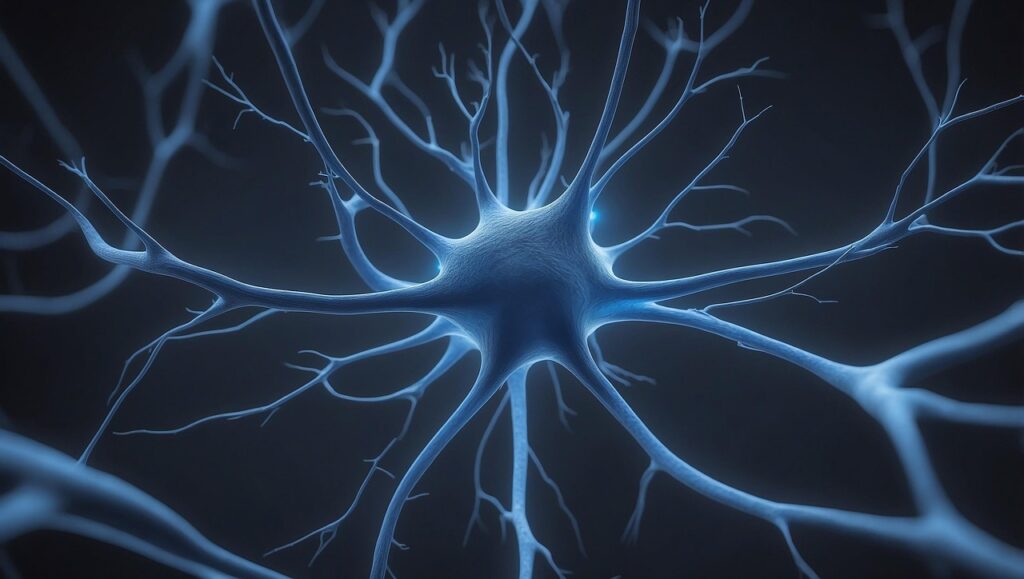
The brain does not finish changing on a particular birthday. It continues to adapt throughout adult life in response to learning, experience, injury, stress, relationships, and repeated behavior. Neuroplasticity is the term used for this capacity to alter the brain’s structure, function, and connections.
That does not mean adults can reshape themselves without limits. Age still matters. So do sleep, health, stress, motivation, previous experience, and the type of skill being learned. An adult brain can change, but change usually requires more deliberate effort than people expect.
The “age 25” idea
The popular claim about age 25 probably comes from research showing that some brain regions continue developing during young adulthood. Areas involved in planning, impulse control, decision-making, and emotional regulation do not all mature at the same time.
That finding was gradually simplified into a much stronger statement: the brain is still developing until 25, and then it is finished.
The reality is more complicated. Brain development is not the same thing as neuroplasticity. Development refers to the growth and maturation of the nervous system. Plasticity refers to the brain’s ability to adapt in response to new demands and experiences. They overlap, but they are not identical processes.
A 40-year-old learning Italian, a 55-year-old changing careers, or a 68-year-old learning unfamiliar software is using a brain that can still learn. The process may be slower or less effortless than it would have been in childhood, but the capacity remains.
Adults also bring advantages to learning. They may understand the purpose of a skill, have better strategies for solving problems, and possess more patience than they did when they were younger. Those advantages do not erase the effects of age, but they can make a difference.
The problem is that adults often interpret difficulty as evidence that they have lost the ability to learn. In many cases, they are simply experiencing the early stage of a skill, when performance still feels awkward and demanding.
What neuroplasticity involves
Neuroplasticity is not one single process. It describes several ways in which the nervous system can adapt.
Connections between neurons can become stronger or weaker. Networks can become more efficient through repeated use. The structure of certain connections can change, and different brain regions may take on new roles when circumstances require it. These changes are involved in learning, habit formation, adaptation, and some forms of recovery after injury.
Consider learning a difficult piano passage. At first, you may need to think about every finger movement. You stop frequently, lose your place, and make mistakes that seem obvious only after they happen.
With practice, the sequence becomes easier to coordinate. You no longer need to consciously direct every part of the movement. The notes have not been stored in the brain like a document in a filing cabinet. Rather, repeated practice has changed how several systems work together.
The same general principle applies to driving, reading, speaking another language, using software, playing a sport, and handling familiar social situations. Repeated experience can make a response more accessible and efficient.
This is useful when the repeated behavior is useful. It becomes less helpful when the brain is repeatedly practicing avoidance, rumination, or an anxious interpretation of ordinary events.
Your brain can learn unhelpful patterns
Neuroplasticity is not automatically positive. The brain does not evaluate every pattern according to whether it is good for your long-term wellbeing. It adapts to what happens repeatedly.
Someone who avoids difficult conversations may become increasingly uncomfortable with conflict. A person who repeatedly interprets delayed messages as rejection may begin to experience that interpretation almost immediately. Someone who responds to stress by withdrawing, checking, or seeking reassurance may find that the behavior becomes harder to interrupt over time.
This does not mean that a person has permanently damaged their brain. It means that a familiar response has become well practiced.
Researchers sometimes use the terms adaptive and maladaptive plasticity to distinguish between changes that support functioning and changes that create problems. The distinction matters because it changes the goal. The aim is not simply to make the brain “more plastic.” The aim is to provide repeated experiences that support a more useful response.
For example, a person who usually becomes defensive when criticized might begin by delaying their reply for a few seconds. During that pause, they could ask themselves what was actually said, what they assumed it meant, and whether another explanation is possible.
That single pause will not erase years of emotional conditioning. It may, however, give the person a different response to practice. Over time, the alternative may become easier to access.
Progress does not necessarily mean that the old reaction disappears. Sometimes it means recognizing the reaction sooner, recovering more quickly, or choosing not to act on it automatically.
New neurons are only part of the story
Adult neurogenesis refers to the production of new neurons. The hippocampus, particularly a region called the dentate gyrus, has been central to research in this area.
The subject remains more complicated than many popular articles suggest. Studying neurogenesis in living human brains is difficult, and researchers continue to discuss how much new neuron production occurs in adults and what role those cells play. Reviews of the evidence support the existence of plastic changes across the adult human brain, but they also emphasize the limitations of current methods and the danger of making broad claims from narrow findings.
This is why statements such as “walking grows new brain cells” should be treated cautiously. Walking, sleep, learning, and exercise may support brain health for several reasons, but none of them can be reduced to one simple biological effect.
Neuroplasticity does not require the brain to create a new neuron every time someone learns a fact or changes a habit. Existing networks can alter their strength, timing, and organisation. The pattern of activity may change even when no new neuron is involved.
That wider view is more useful than treating neurogenesis as a miracle explanation for every healthy behaviour.
Learning changes with age
Children generally learn some skills more easily than adults, particularly when the skill depends on developmental windows or highly sensitive periods. Pronunciation in a new language is one example. An adult may become fluent, but achieving a native-like accent can be more difficult.
Ageing can also affect sleep, hearing, vision, attention, processing speed, and memory. Medical conditions and long-term stress may further influence how easily someone learns.
These facts should not be ignored in the enthusiasm surrounding neuroplasticity. “The brain can change” does not mean “age makes no difference.”
At the same time, difficulty is not the same as impossibility. Adults often compensate for slower processing with knowledge, planning, motivation, and context. They can break a skill into smaller parts, choose better practice methods, and understand what they are working toward.
A beginner who expects immediate fluency may give up before the brain has had enough time to adapt. Early practice often feels inefficient because the new skill has not yet become familiar. That uncomfortable stage is part of learning rather than proof that learning has failed.
Attention, novelty, and repetition
Learning requires more than exposure. Attention helps determine what receives enough processing to be remembered and practiced.
It is difficult to build a new skill while constantly switching between messages, notifications, emails, and unrelated tasks. A person may spend an hour at a desk without giving any one activity enough uninterrupted attention to make meaningful progress.
This does not require a completely distraction-free life. A short period of focused practice can be more realistic and more useful than an ambitious routine that quickly becomes impossible to maintain. Reading for fifteen minutes without checking a phone, practising one section of a song, or completing one unfamiliar task without switching activities can provide a better learning environment.
Novelty can also help because unfamiliar situations require the brain to process information rather than rely entirely on an established routine. Learning a few phrases in another language, trying a different route, cooking an unfamiliar dish, or finally working out how to use a tool can create a manageable challenge.
The challenge does not need to be extreme. In fact, a task that is too difficult may create frustration without producing much useful practice. A task that is slightly beyond the person’s current ability is often more sustainable.
Repetition remains essential. A new experience may attract attention, but repeated practice is what gives the brain a chance to make the response more accessible.
Emotional habits can also shift
Emotional reactions often feel permanent because they happen quickly. Someone makes a critical comment, and before the person has examined the situation, they feel rejected, embarrassed, or angry.
The first reaction may be connected to earlier experiences, but it is not necessarily an accurate description of the present situation. Changing this pattern usually involves more than telling yourself to be positive.
A more realistic approach might look like this:
- Notice the physical and emotional reaction.
- Identify the interpretation that appeared automatically.
- Separate what was actually said from what you assumed it meant.
- Consider at least one alternative explanation.
- Decide what response would be useful rather than merely familiar.
This process may feel slow at first. The person may still become upset, but perhaps they notice it before sending an angry message. Later, they might be able to ask a question instead of making an accusation. Eventually, they may recover from the interaction more quickly.
Those changes can seem insignificant when compared with the idea of a complete personality transformation. In everyday life, however, they may be exactly the kind of change a person wants.
Where journaling can help
Journaling is sometimes presented as a way to “rewire the brain.” That description is too grand and too vague.
Writing can still be useful. It creates a record of experiences that might otherwise blur together, and it can slow down reactions that feel automatic. A person may notice that they become defensive during a particular type of conversation, assume the worst when someone takes longer to reply, or use the same explanation to justify a habit they would like to change.
A simple structure can help:
- What happened?
- What did I feel?
- What did I assume?
- What other explanations were possible?
- What did I do next?
- What might I try next time?
This kind of reflection does not guarantee a neural change. It may, however, make patterns easier to recognize and give the person an opportunity to rehearse a different response.
The benefit is often gradual. A person may not feel transformed after writing in a notebook for a month. They may simply begin to notice a familiar reaction while it is happening. That extra awareness can create a small space between the trigger and the response.
The limits of “rewiring”
The language of brain rewiring has become part of a large wellness industry. Some products and practices are based on reasonable principles. Others use neuroscience vocabulary to make promises that the evidence cannot support.
Be cautious about claims that a particular exercise will completely redesign your personality, remove trauma through positive thinking, or produce dramatic brain changes in a fixed number of days. Neuroplasticity does not give people unlimited control over their thoughts, emotions, or biology.
Sleep, stress, illness, medication, genetics, relationships, and living conditions can all influence how a person learns and adapts. Two people can experience the same event and respond differently because they bring different histories and biological circumstances to it.
This doesn’t mean change is impossible. It means that the process looks different for each person, and simple programms often overlook that.
A person can learn a skill, strengthen a habit, improve their attention, and develop a different response to a familiar emotional trigger. They may also recover some abilities after an injury, depending on the injury, the treatment, and other factors. None of this means that every unwanted pattern can be removed or that every goal is equally achievable.
What can you actually change?
A useful way to think about neuroplasticity is to imagine a landscape with well-used paths. The familiar route is easy to follow because it has been walked many times. A new route initially feels slower and less obvious. Walking it repeatedly does not guarantee that the old path will vanish, but it can make the alternative easier to use.
That is a more realistic picture than the promise of becoming an entirely new person.
You can learn new information. You can improve at a skill. You can practise directing your attention. You can become more aware of emotional habits and interrupt some of them. You can create conditions that make learning more likely, including sufficient sleep, focused practice, manageable challenges, and regular repetition. These changes tend to develop over time rather than appearing after one dramatic insight.
If one pattern feels permanent, start by observing it for a week. Record when it appears, what seems to trigger it, what you usually do next, and what happens afterward.
Do not begin by demanding that the pattern disappear. First, find out how it works. Once you can recognise it more clearly, choose one small response to practise instead.
That is not a promise to become someone else. It is a way of giving your brain more than one route to follow.